A suitable restoration roof
The existing material, adhesion, moisture condition and details are evaluated for the coating system.
A sound base is essential to useful restoration.
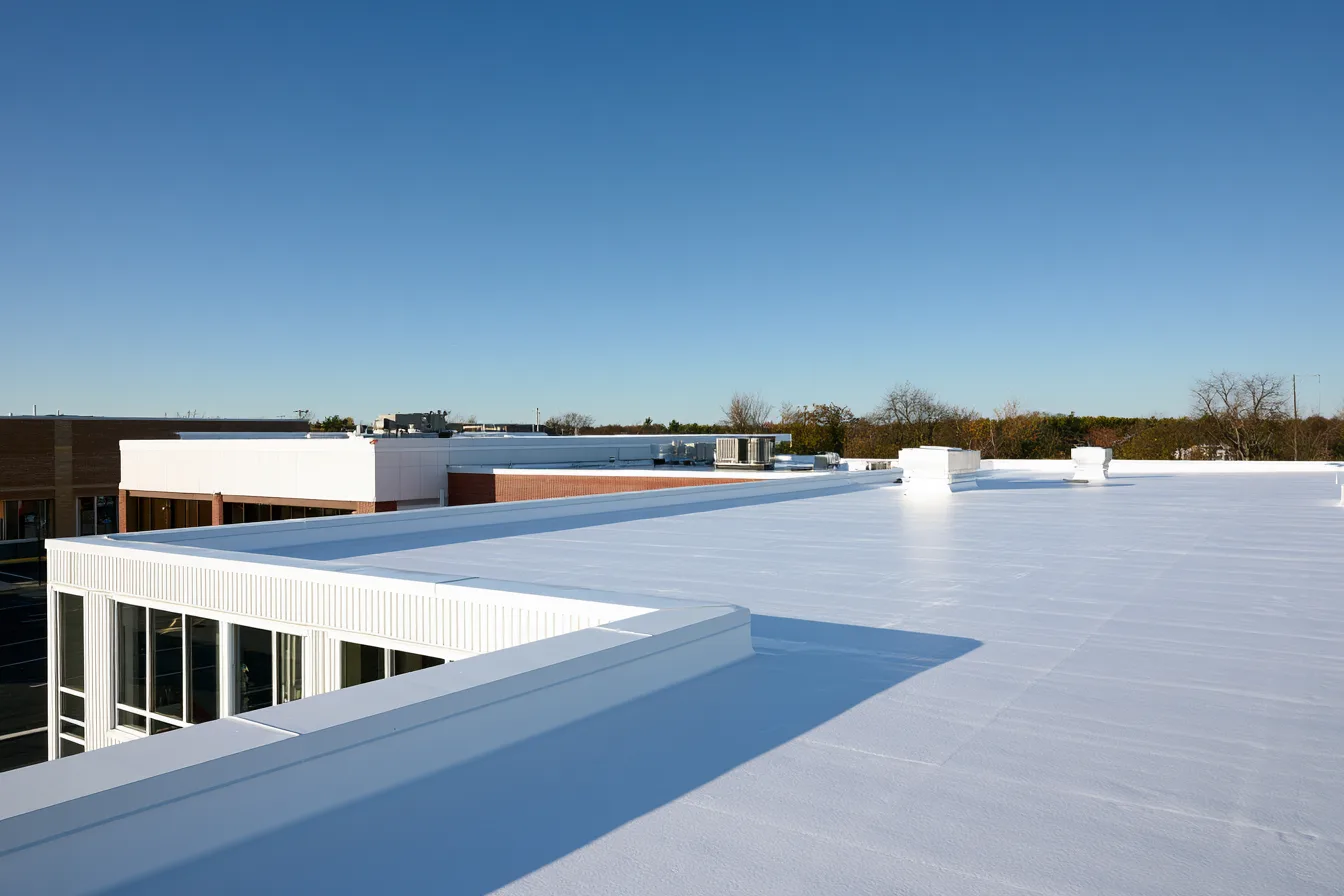
A coating can restore a suitable existing roof after repairs and preparation. The roof beneath it must be sound enough to support that work.
Free roof inspections. Repair options explained from the roof itself.
The existing material, adhesion, moisture condition and details are evaluated for the coating system.
A sound base is essential to useful restoration.
Open seams, damaged flashings or local defects need their own repairs and preparation.
A new surface does not rebuild a failed connection underneath.
Wet insulation, broad deterioration or an unstable substrate can make restoration unsuitable.
Replacing damaged layers addresses work that coating cannot do.
Understand the existing assembly, its condition and any moisture beneath the covering.
Address defects, clean and prepare the substrate, and use required primer or reinforcement for the selected system.
Coverage, thickness, detail treatment and curing conditions follow the actual product requirements.
A coating follows the shape and condition of the roof beneath it. It cannot change a low area into a drainage slope, remove saturated insulation or stabilize a failing deck. Those problems need their own work before restoration is a useful option.
Acrylic, silicone and other coatings have different product requirements and compatibility limits. The choice follows the existing roof and proposed work. Reflectivity is a product property; the building and its use determine any actual energy effect.
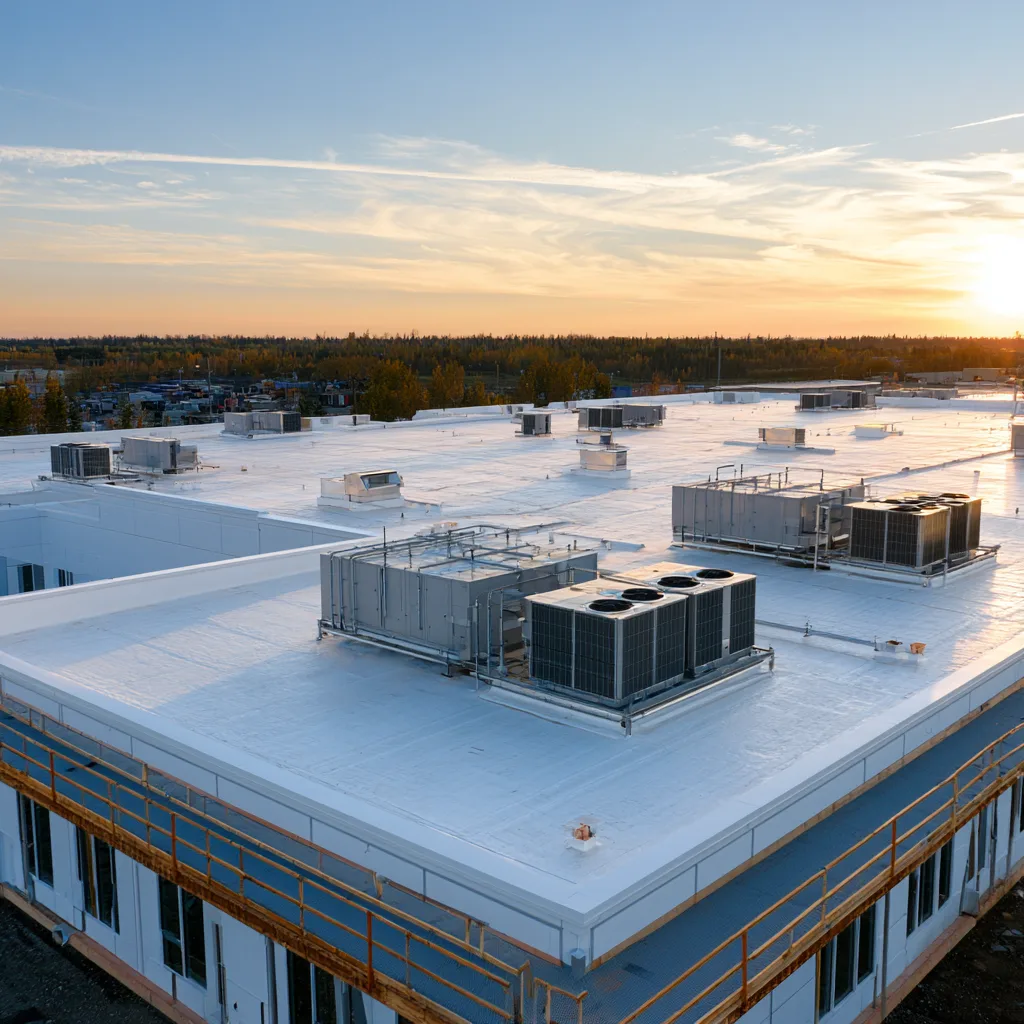
Cleaning, adhesion preparation, damaged details and local repairs change the scope.
Material compatibility and required application thickness affect quantities and labor.
Curbs, penetrations, edges and the occupied building shape how the work is completed.
Request a free commercial roof inspection to find out whether repair, restoration or replacement fits the roof.